
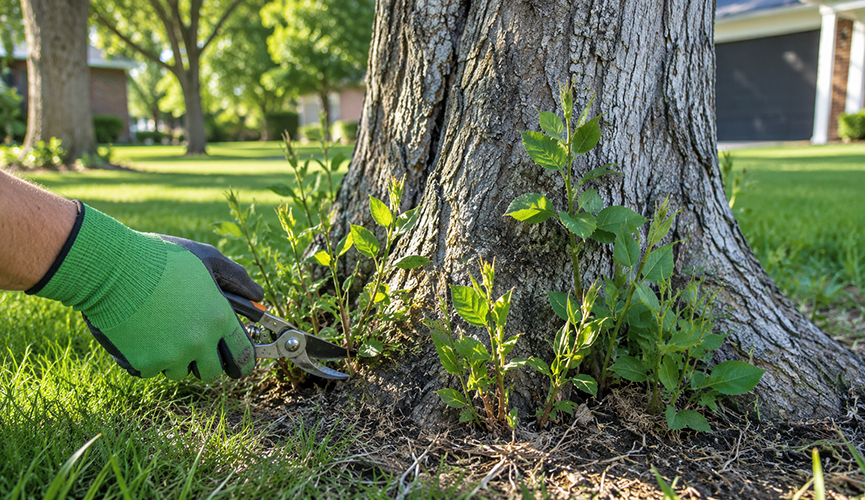
Have you ever cut down tree sprouts in your yard, only to see them return even thicker a few weeks later?
Many homeowners assume the only answer is harsh chemicals or complete tree removal, but that often creates bigger problems underground.
If you are searching for how to stop tree sprouts without killing tree, the good news is that safe and practical methods exist. Most sprouts are connected to underground root systems, meaning careless treatments can damage mature trees and weaken healthy growth. The key is understanding why sprouts appear and learning how to stop them without stressing the parent tree.
It also helps to know the difference between tree seedlings and tree suckers. Seedlings grow from fallen seeds and usually develop their own small roots. Suckers grow directly from existing tree roots and remain attached to the parent tree. Once you identify the problem correctly, controlling the growth becomes much easier.
Understanding Why Your Tree is Sprouting in the Lawn
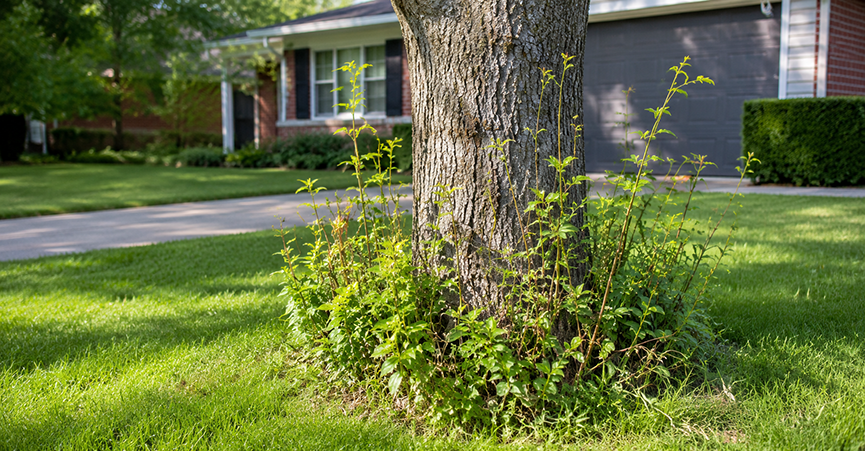
Trees naturally rely on hormones called auxins to regulate growth. When a tree becomes stressed because of drought, heat, root damage, compacted soil, or over-pruning, dormant buds hidden inside the root system become active. This survival response explains why trees sprouting around the trunk or lawn often appear after storms, trenching work, or heavy trimming.
Certain species are naturally more aggressive than others. Honey mesquite, maple, elm, pecan, and cottonwood trees frequently send up sprouts after stressful weather conditions. In West Texas, dry summers and compacted clay soil often increase sucker growth.
|
Feature |
Root Suckers | Water Sprouts |
|
Origin Point |
Root system or base of the trunk. |
Vertically from trunk or branches. |
|
Common Cause |
Root damage, soil compaction, and genetics. |
“Topping,” heavy pruning, sudden light. |
|
Location |
In the grass or at the tree base. |
High in the canopy or along the trunk. |
|
Risk Factor |
Diverts nutrients; ruins aesthetics. |
Weak attachments; break in high winds. |
| Relationship |
Often, “clones” of the rootstock. |
Rapid growth from dormant bark buds. |
Root suckers usually appear in the lawn or near the trunk flare, while water sprouts grow upright from branches or the trunk itself. Both forms of growth signal stress, but root suckers often become more invasive because they spread underground.
The Best Ways to Stop Tree Sprouts Without Killing the Parent Tree
The safest strategy focuses on tree health first. Many homeowners spray systemic herbicides directly onto sprouts without realizing that those chemicals can travel through connected roots and damage the parent tree.
When people search for how to stop tree sprouts without killing tree, they should avoid broad chemical applications whenever possible. A healthier approach combines proper pruning, moisture management, mulching, and targeted growth control products.
The best non-invasive methods include:
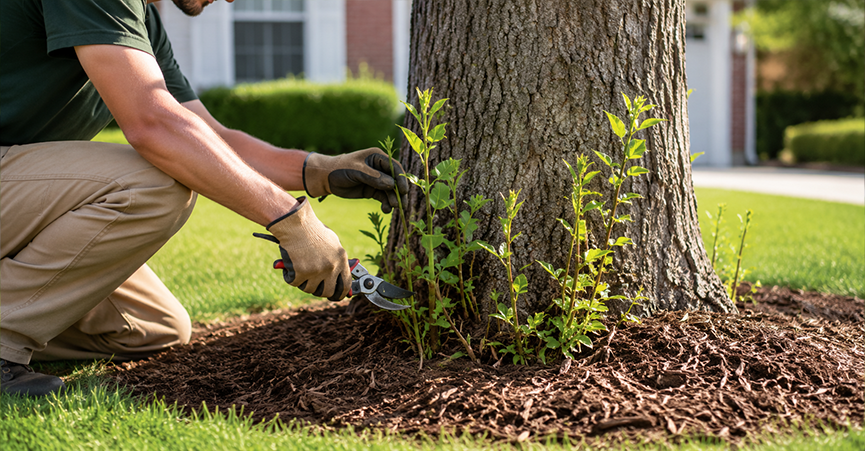
- Pruning sprouts flush to the root
- Using growth regulators with NAA
- Deep watering during drought
- Adding mulch around exposed roots
- Protecting the trunk from mower damage
- Improving soil health around stressed trees
These methods help prevent suckers without shocking the tree. They also reduce future stress that triggers additional sprouting.
If sprouts continue spreading aggressively across your property, contacting a professional tree service lubbock company may help identify hidden root issues before the problem becomes severe.
Step by Step: How to Remove Tree Suckers Safely
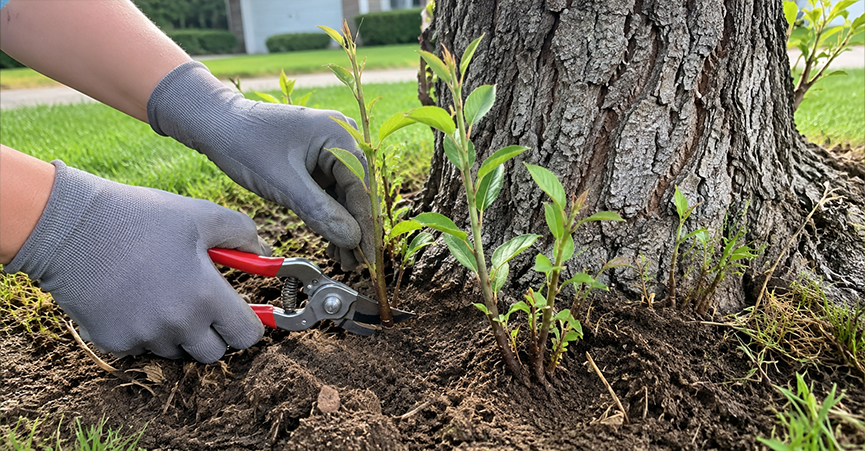
Homeowners researching how to remove tree suckers should focus on proper timing and technique instead of rushing the job. Late winter and early spring are the best times to prune because the tree has not entered its strongest growth cycle yet.
Follow these steps carefully to remove suckers safely:
- Clear the soil gently to expose where the sucker connects to the root.
- Use sharp bypass pruners to cut flush against the root without leaving a stub.
- Sanitize tools between cuts to prevent disease transfer.
Avoid tearing or twisting the shoots because rough wounds encourage even more regrowth.
A quick pull test can also help identify whether the growth is a seedling or a sucker. Tree seedlings usually pull free with a small taproot attached. Suckers remain firmly connected because they grow directly from large parent roots.
Use the following checklist for cleaner and safer pruning:
|
Tool/Product Type |
Purpose |
Recommended Example |
|
Bypass Pruners |
Sharp, clean cuts to prevent disease |
Felco 2 or Corona Classic |
|
Growth Regulator |
Blocks new buds from forming |
Monterey Sucker Stopper (NAA) |
|
Sanitization |
Prevents cross-contamination |
70% Isopropyl Alcohol |
How to Get Rid of Tree Root Suckers Permanently
Many homeowners searching for how to get rid of tree root suckers expect an instant solution, but long-term control requires consistency. Repeated mowing alone rarely solves the issue because dormant buds continue regenerating beneath the soil.
One effective method involves applying sucker control products directly onto fresh pruning cuts. Growth regulators containing NAA slow the development of dormant buds while minimizing stress on healthy tissue.
Mulching also plays a major role in prevention. A two to three-inch mulch ring protects exposed roots from heat and lawn equipment injuries while helping the soil retain moisture. Keep mulch slightly away from the trunk to avoid decay.
Deep watering is equally important. Slow soaking sessions encourage stronger roots and reduce the stress response responsible for excessive sprouting.
If you are wondering how to get rid of tree sprouts spreading through turf areas, avoid repeatedly chopping them with a mower. Proper pruning combined with healthier soil conditions produces better long-term results.
Common Species Prone to Trees Sprouting in Lawn Areas
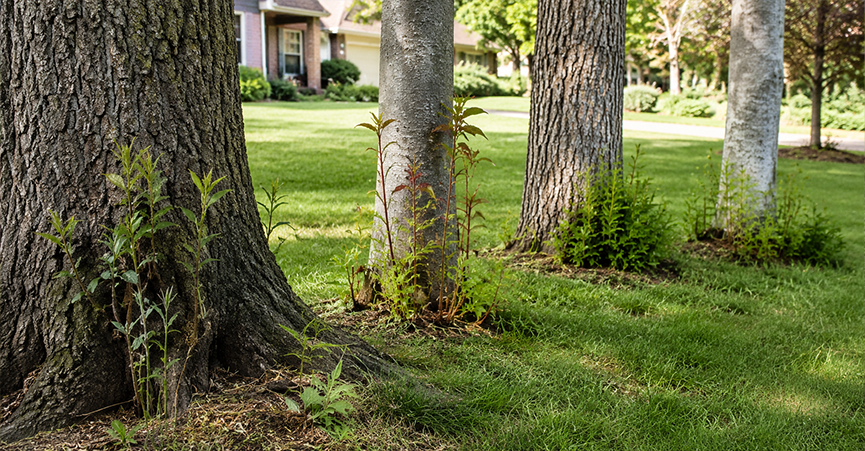
Some species are genetically programmed to sprout more aggressively than others. Understanding local tree behavior helps homeowners manage recurring growth more effectively.
- Honey mesquite trees frequently send up dense root shoots after drought or pruning. Their spreading roots can quickly invade lawns and garden beds.
- Live oaks and pecans also struggle during long periods of West Texas heat. Stress near the trunk often triggers new sprouts around the base.
- Maple and elm trees are known for shallow roots that produce clusters of unwanted shoots after root disturbance.
- Cottonwoods and poplars create especially invasive underground growth. Even small root fragments may generate new shoots across large sections of turf.
Because these species require careful maintenance, many homeowners contact the best tree service Lubbock residents trust for professional guidance and pruning support.
When DIY Isn’t Enough: Professional Tree Maintenance in Lubbock
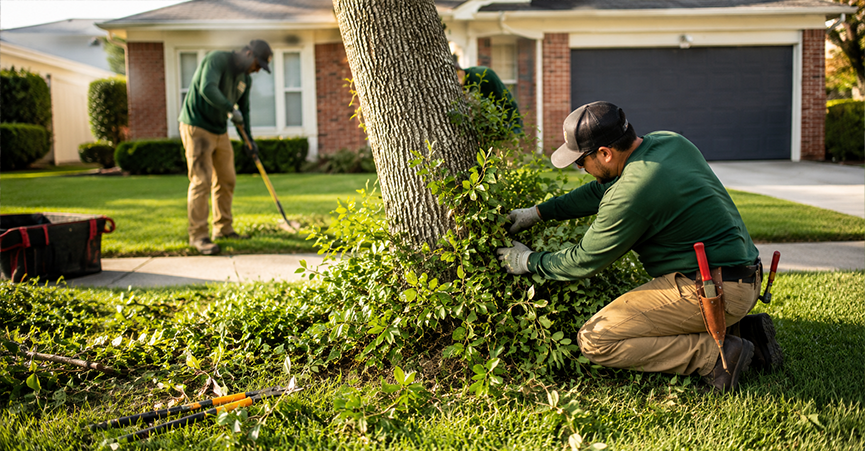
Sometimes excessive sprouting points to deeper structural problems that basic pruning cannot solve. Root rot, storm damage, internal decay, and compacted soil can all force trees into survival mode.
A qualified lubbock tree service company can inspect the tree’s health, identify damaged roots, and create a long-term treatment plan. Professional arborists also know how to prune correctly without causing additional stress.
In severe cases, a complete tree and shrub removal service may be necessary when declining roots create safety risks near homes, driveways, or sidewalks.
Do not guess with your tree’s health. If sprouts are taking over your yard, contact Flocy Tree Service LLC for expert inspections, pruning, and reliable maintenance solutions in Lubbock, TX.
Why Professional Tree Care Matters
Trying to handle aggressive sprouts alone can sometimes create bigger problems for the tree and surrounding landscape. Professional tree care helps identify the real cause before the issue spreads further.
- Detects hidden root damage and early decay
- Prevents improper pruning that triggers more sprouts
- Protects healthy trees from unnecessary stress
- Reduces long term lawn and landscape damage
- Improves overall tree health and appearance
- Provides safer and more effective sprout control
- Helps prevent future regrowth problems
If unwanted sprouts keep returning around your property, Flocy Tree Service can provide expert inspections, pruning, and long term tree care solutions in Lubbock, TX.
FAQs
Why does my tree keep sprouting at the base?
Base sprouts usually appear because of drought, root injury, compacted soil, heat stress, or aggressive pruning weaken mature trees.
What are the shoots growing from the base of a tree?
They are commonly called suckers and develop directly from connected parent roots beneath the surrounding soil surface area.
How to stop trees from sprouting at the base?
Proper pruning, mulching, deep watering, and targeted growth regulators safely reduce sprouts without damaging healthy mature trees naturally.
How to keep tree sprouts from coming back?
Prune sprouts flush against roots and minimize drought, mowing injuries, and soil stress around trees whenever possible outdoors.
What kills little tree sprouts?
Manual pruning and targeted growth regulators safely eliminate small sprouts better than strong herbicides around mature trees permanently.
Can you make a tree stop growing sprouts after cutting it down?
Stump grinding and targeted root treatments reduce regrowth, but aggressive species may continue producing sprouts for years afterward.